
Housing Services
Housing First
Visionwest Community Housing in Tamaki Makaurau Auckland is a member of the Auckland Housing First Collective which takes a collective impact approach to addressing homelessness, supporting whānau with immediate access to permanent housing coupled with intensive wraparound support services.
Since its establishment in March 2017, Housing First as a collective has housed 1,870 whānau. Visionwest continues to deliver Housing First, maintaining our contracted levels of 300 whānau with social work support and a total of 334 whānau living in Housing First leased properties.
Long-Term Supportive Housing
Visionwest’s supportive housing provides permanent homes for those in need, alongside tailored support services. Through our Supportive Housing team, we work with hundreds of households to foster transformation – helping whānau build the knowledge and skills needed to thrive independently in their communities.
Over the past year, a significant number of whānau have transitioned out of needing intensive support while remaining securely housed. This reflects a positive shift toward stability and independence, showing that many families are now able to live confidently without ongoing wraparound services.
Another encouraging outcome has been the movement of whānau from long-term social housing into private rentals. This transition highlights their readiness to embrace financial and social independence, with many continuing to live in Visionwest homes under new arrangements.
However, the housing landscape has not been without its challenges. Changes in government policy – such as rent approvals, benefit adjustments, and amendments to the Residential Tenancies Act– have created pressures across the sector. For instance, the ability for landlords to issue eviction notices without cause has made tenancy sustainability more difficult, particularly where private landlords are involved.
Additionally, benefit changes have led to financial strain for some whānau, resulting in rent arrears and increased vulnerability. In response, Visionwest’s support services have actively engaged in advocacy efforts, working alongside whānau and MSD to navigate these financial challenges and prevent homelessness.
Rapid Rehousing
Visionwest is part of the Rapid Rehousing programme based on Housing First principles. This enables individuals, families and whānau to quickly exit homelessness, return to permanent housing in the community, and maintain their tenancies to avoid a return to homelessness.
People facing homelessness or living in emergency housing require the right support to enable them to get back on their feet and into a stable home. Rapid Rehousing helps facilitate this.
Rapid Rehousing is for individuals, families and whānau who:
- Are recently homeless.
- Require low to medium levels of support to access and maintain permanent housing.
- Require specialist homelessness support for a finite period (up to 12 months)
Rapid Rehousing is dependent on current housing supply.
Transitional Housing
Visionwest Community Housing provides transitional housing at an affordable rent for those in desperate need. We have a number of transitional housing developments and properties across West Auckland, South Auckland and Canterbury. Each of our transitional housing properties is fully furnished and equipped.
Both our transitional housing services in Auckland and Christchurch have continued to house whānau during challenging times where we have witnessed increasing needs and rising complexities. Throughout the year, on average, we had 93 Auckland whānau and 80 Canterbury whānau in Transitional Housing.
While transitional housing is designed for short-term accommodation of 12 weeks, on average whānau are staying 47 weeks in Auckland and 38 weeks respectively in Canterbury. This remains a challenge for social housing providers.
Transitional housing demand is complex and whānau usually present with significant trauma and high needs. The work of Community Housing goes well beyond the provision of a roof over the head. It involves detailed and tailored assistance often involving multiple support services.
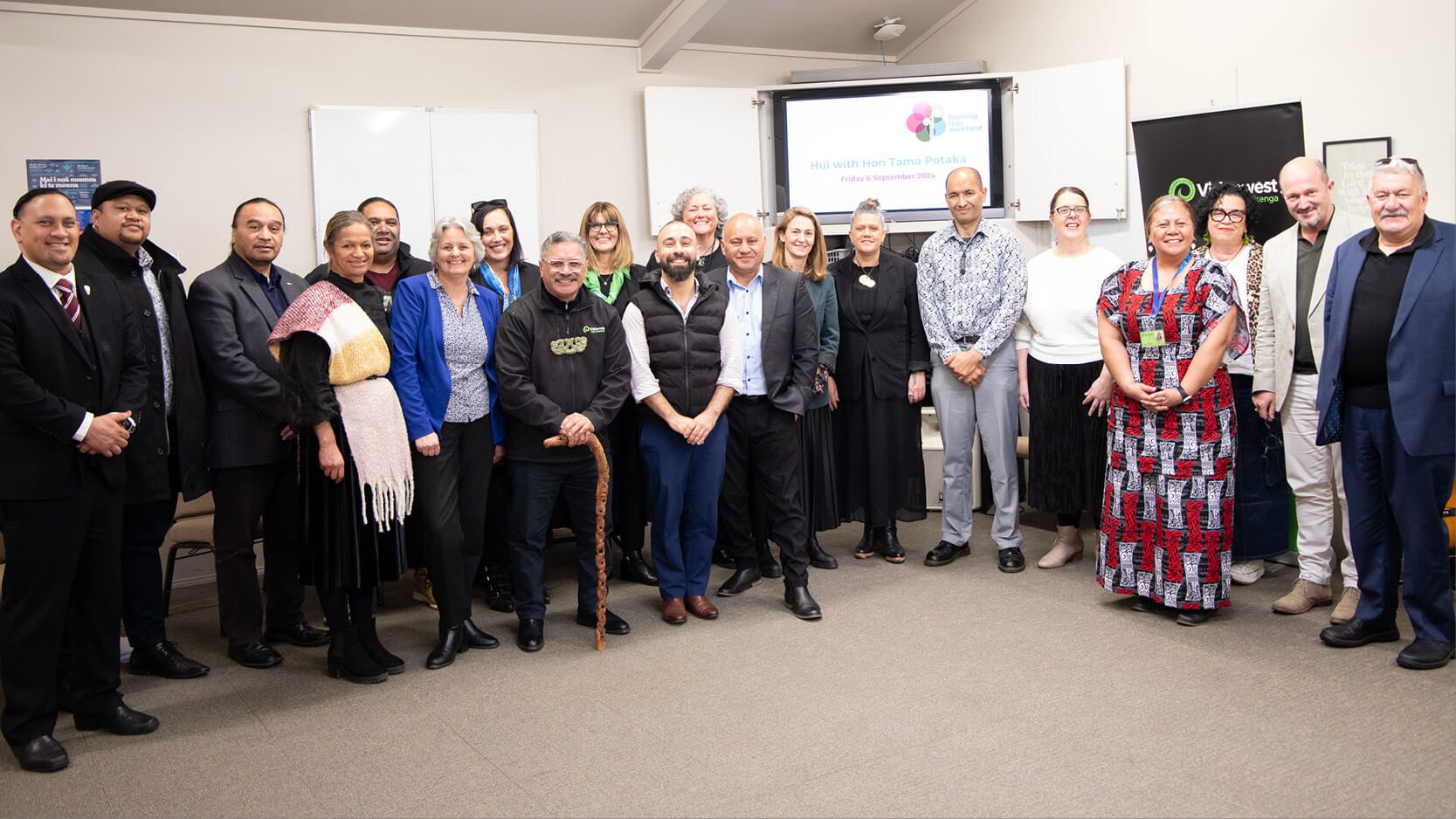
Tama Pōtaka, Housing First Hui 6 September 2024.
Youth Housing
The Youth Housing area is a developing one for Visionwest Community Housing. We currently have three youth housing initiatives, both aimed at wāhine:
• Whare Hiwa.
• Le Aute.
• My Whare
To facilitate and grow our work addressing youth homelessness, Margaret Manu has joined the Community Housing team as our team leader for Youth Transitional Housing,
Over the past year, several milestones were celebrated, including a university graduation, gaining part-time employment, and the transition of four wāhine from Whare Hiwa and two from our new Le Aute initiative. Additional achievements included one wāhine securing her restricted driver’s licence – a significant step for this young woman and a huge step towards her gaining independence.
The team remains actively engaged in networking and sector collaboration continuing to partner with youth service providers through the Manaaki Rangatahi collective.
Cultural engagement has been a priority, with wāhine encouraged to participate in Pasefika Māori celebrations and events. Staff capability has also been enhanced through participation in family harm training, Pou Pasifika Youth Workers’ rōpū (group), Black Rain internal training, and regular Supportive Housing hui. The Team Lead has also facilitated the Ready to Rent programme to support youth in preparing for independent living.
Whare Hiwa
Since opening on 17 March 2024, Whare Hiwa has provided housing support for a number of 18-24 year old wāhine who had been experiencing homelessness or facing housing insecurity.
Le Aute
In December 2024, we opened Le Aute, Visionwest’s Pasefika-focused youth housing initiative, though it remains open to all young women in need. The whare provides safe transitional housing for wāhine aged 18–24 years, supporting them towards independence and long-term stability.
The home’s location, close to campus, makes it easy for residents to access Visionwest services such as Money Mentors and Mātanga Oranga. Alongside this, each wāhine receives the support of a youth mentor as they study, work, or actively search for employment.
In December 2024, the three-bedroom home was filled for the first time. By May 2025, one wāhine had successfully reconnected with her whānau, while one was supported to relocate to transitional housing in Christchurch. An update from her support navigator states that she is actively studying and engaged with her supports through our team in Christchurch. Currently, Le Aute is home to one of the original residents along with two new wāhine, one of whom transferred from Whare Hiwa in August 2025.
Read more about Le Aute in the Milestones section of this Report.
My Whare
In a similar approach to Whare Hiwa, the youth housing team apply a Te Ao Māori lens to strengthen cultural identity and ways of belonging within their practice. This is ingrained within key Māori models of practice. Each of the wāhine that have lived in and been supported in My Whare have continued to thrive in their independence when they moved out.
Housing Outreach Team
The number of people rough sleeping and car sleeping has doubled in the past year, driven by a reduction in emergency housing and wider political and financial pressures. By May 2025, the Outreach team was supporting 124 whānau, up from 60 a year earlier.
Amongst the homeless, the Outreach team are seeing more Māori wāhine on the streets and sleeping in cars. There is also more homelessness as a result of head injuries and the resulting mental health issues leading to an increase in the complexity of the mahi that staff are managing.
Our Outreach team is led by an experienced Housing practitioner, Jeremy Nicholls. This team supports rough sleepers across West, Central, and North Shore, Auckland. The work on the North Shore is an extension of our previous year’s work focus
The team has close relationships with the Outreach teams from two other organisations: The Salvation Army and Kāhui Tū Kaha. We are continually working to improve and grow these networks through local boards, housing providers, and other statutory organisations.
What is rewarding for the team is that all of them have helped whānau off the street and into some form of accommodation over the past financial year, whether it be permanent housing, transitional housing or into a boarding house.
Sustaining Tenancies
Sustaining Tenancies is a free service available to all tenants and landlords, offering practical support to those at risk of losing their tenancy. Across regions like Auckland and Canterbury, many whānau have successfully graduated from the programme and continued to maintain stable housing thanks to the dedicated efforts of our support staff.
One emerging challenge for the team is hoarding, which often stems from trauma and can require long-term therapeutic care that extends beyond the programme’s typical duration. Despite this, the team remains committed to supporting affected whānau with compassion and persistence.
The continued success of whānau in maintaining their tenancies after completing the programme is a testament to the impact of Sustaining Tenancies and the dedication of the staff who make it possible.
Additionally, benefit changes have led to financial strain for some whānau, resulting in rent arrears and increased vulnerability. In response, Visionwest’s support services have actively engaged in advocacy efforts, working alongside whānau and MSD to navigate these financial challenges and prevent homelessness.
Māori Capabilities
In October 2024, Te Keepa Mihaere joined Visionwest Community Housing as the Operations and Māori Capabilities Lead. With 68% of Visionwest tenants identifying as Māori, it’s vital our housing services reflect tikanga and uphold mana in our interactions with whānau Māori. Over the past year, Visionwest Community Housing has embedded a tikanga-based approach that is culturally safe and grounded in respect for whānau autonomy.
This has included our first Kaimahi Māori Wānanga at Piha in early 2025, a time that not only strengthened internal cohesion but also laid the foundation for a unified approach to Māori capability development.
To carry this work forward, Community Housing has established three dedicated rōpū to develop and deliver the Māori Capability Strategy.
At a strategic level, Housing continues to advance Māori capabilities through a multi-faceted framework that includes: Governance and Partnerships, Workforce Development, Service Practice, and Community Outcomes.
Together, these initiatives demonstrate that Māori capabilities are not add-ons, but are central to Visionwest Community Housing’s identity. They shape the way we work, inform the decisions we make, and strengthen the outcomes we achieve with whānau.
Read more about Māori Capabilities within Visionwest Community Housing in the Milestones section of this Report.
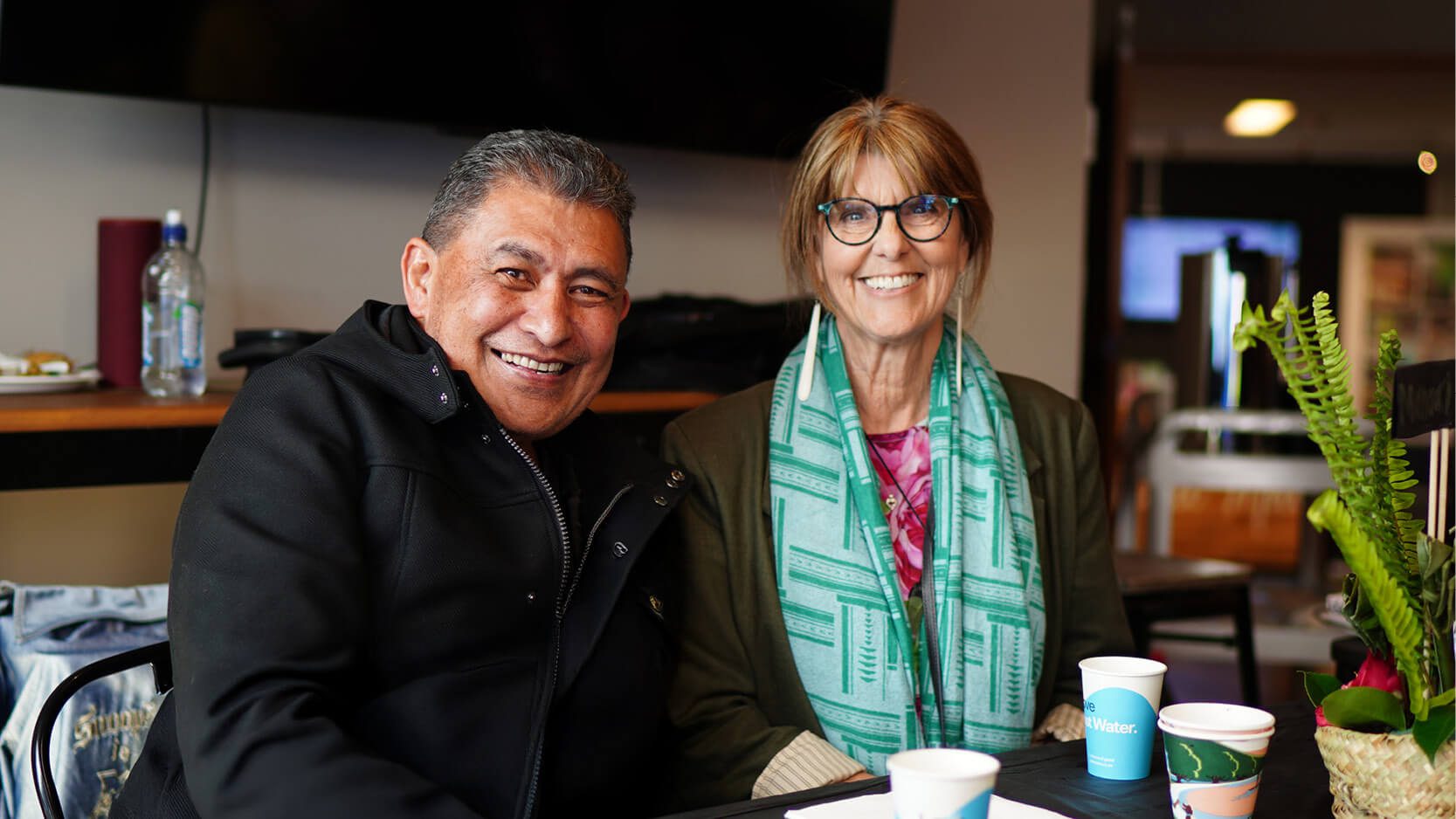
Te Keepa Mihaere and Lisa Woolley.
Conclusion
Visionwest Community Housing remains a strong advocate for the homeless in our communities with strong collaboration across the sector highlighting the respect we have gained as a trusted partner in housing and homelessness.
The mahi is not always plain sailing though. We have seen an increase in the number of housing referrals through probation and the courts. More elderly people are being referred across our supported housing teams, and we have more whānau with head injuries and disabilities.
Alongside this, more whānau have experienced past trauma and are requesting counselling services. There are, however, increasing waitlists and challenges with accessing this support.
The number of whānau with English as a second language – who require translator services and culturally responsive support – is continuing to grow.
But the work is rewarding and, every day we are encouraged by the news of whānau who have moved forward in their journeys to transformation.